
Nobody tells you how long the days after an embryo transfer feel. You notice every twinge. A bit of tiredness at 4 pm, a sore breast, a strange taste in your mouth, and your mind jumps straight to "is this it?" If you're going through IVF treatment in Ahmedabad, it helps to know what early signs can look like and when to ring your fertility specialist. One thing to hold onto: symptoms can't confirm a pregnancy, and they can't rule one out either.
What Happens After an IVF Embryo Transfer?
After the transfer, the embryo has to settle into the uterine lining. Doctors call this implantation. Once it takes hold, your body starts producing hCG (human chorionic gonadotropin), the hormone a pregnancy test looks for.
Some women notice changes while this is going on. Plenty feel nothing. Both can end in a healthy pregnancy.
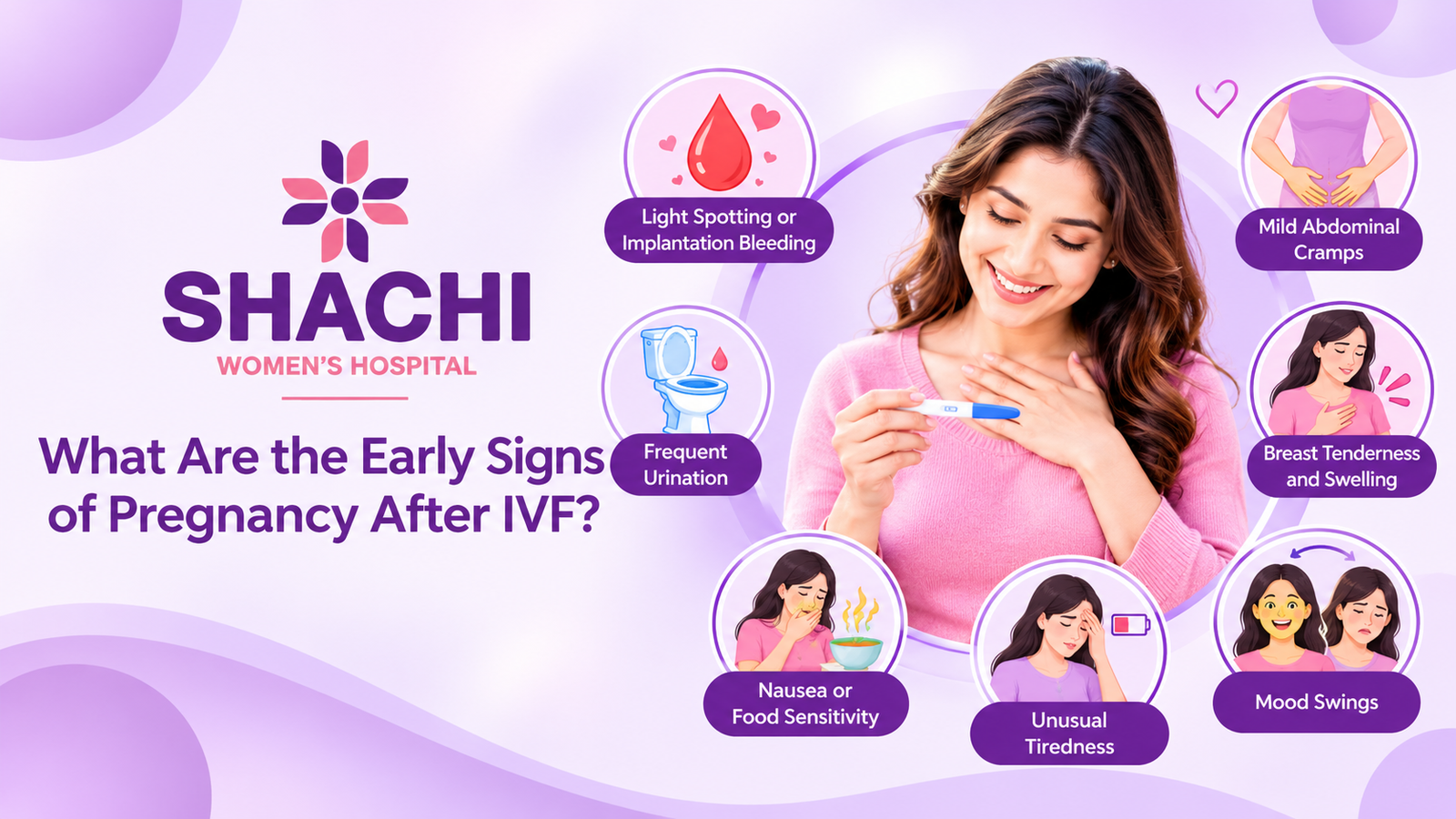
7 Early Signs of Pregnancy After IVF
Any of these can appear in early pregnancy. None of them proves the transfer worked.
1. Light Spotting
A little pink or brown spotting after the transfer is fairly common. It may coincide with implantation, but it can have other causes, and many pregnant women never spot at all.
2. Mild Cramps
A dull ache or pulling feeling low in the belly is possible. Early pregnancy can cause it. The hormone medicines and the transfer itself can too, so it's hard to read much into it.
3. Sore or Swollen Breasts
Tender, heavy breasts are a classic complaint. Progesterone and oestrogen are usually responsible, and you're likely taking extra progesterone during IVF anyway.
4. Unusual Tiredness
Feeling worn out even after a good night's sleep is common. The progesterone you're taking after transfer can make you sleepy all day.
5. Nausea or Food Aversions
Some women feel queasy or can't stand a smell they never minded before. It usually starts once pregnancy hormones build up, so it often shows up later.
6. Needing the Washroom More Often
Pregnancy increases blood flow to the kidneys, and hormones change how your body handles fluid. The result is more trips to the toilet.
7. Mood Swings
Tearful one minute, snappy the next? Hormones play a part. So does the stress of waiting for a result, which is no small thing.
When Do Pregnancy Symptoms Start After IVF?
There's no fixed schedule. A few women notice changes within the first two weeks, and others feel nothing in that time. This is a rough picture of how it can go:
| Time After Embryo Transfer | What You May Notice |
|---|---|
| Days 1 to 3 | Usually no clear pregnancy symptoms |
| Days 4 to 6 | Possible mild cramps or spotting |
| Days 7 to 10 | Possible tiredness, breast tenderness, or bloating |
| Days 11 to 14 | Some women may notice nausea or frequent urination |
Treat this as a rough guide only. When implantation happens, and when symptoms begin, depends on how the embryo develops and how your own hormones respond.
How Can You Confirm Pregnancy After IVF?
The beta-hCG blood test is the dependable way. It measures the pregnancy hormone in your blood, and your fertility specialist will usually schedule it 10 to 14 days after the transfer, depending on your protocol.
If the result is positive, a second blood test often follows to check how the level is rising. A scan comes later to see where the pregnancy sits and how it's developing.
A word of caution: avoid testing at home too early. Some fertility injections contain hCG and can throw up a false positive. Test too soon without them, and you may get a negative simply because the hormone hasn't built up yet.
What Should You Do After an IVF Embryo Transfer?
The wait can wear you down, and it's tempting to read meaning into every twinge. Try not to. Stick to your doctor's advice instead. A few things that help:
- Take your progesterone and other medicines at the times you've been given.
- Eat regular meals and drink plenty of water.
- Skip heavy exercise or lifting if your specialist has told you to.
- Rest when you're tired and keep your days calm.
- Turn up for every blood test and follow-up visit.
- Don't stop your medicines because of spotting or an early negative home test.
Get Personalised Fertility Guidance at Shachi Women's Hospital
Waiting to learn whether IVF has worked is draining. Having a medical team to talk to makes the symptoms easier to understand and the next steps clearer.
Shachi Women's Hospital offers guidance on fertility treatment, pregnancy monitoring and reproductive health concerns. If you're planning IVF or have just had a transfer, speak to your fertility specialist instead of leaning on symptoms.
To learn more about IVF treatment in Ahmedabad, call Shachi Women's Hospital on 9090118080 and talk through your fertility care with the team.