
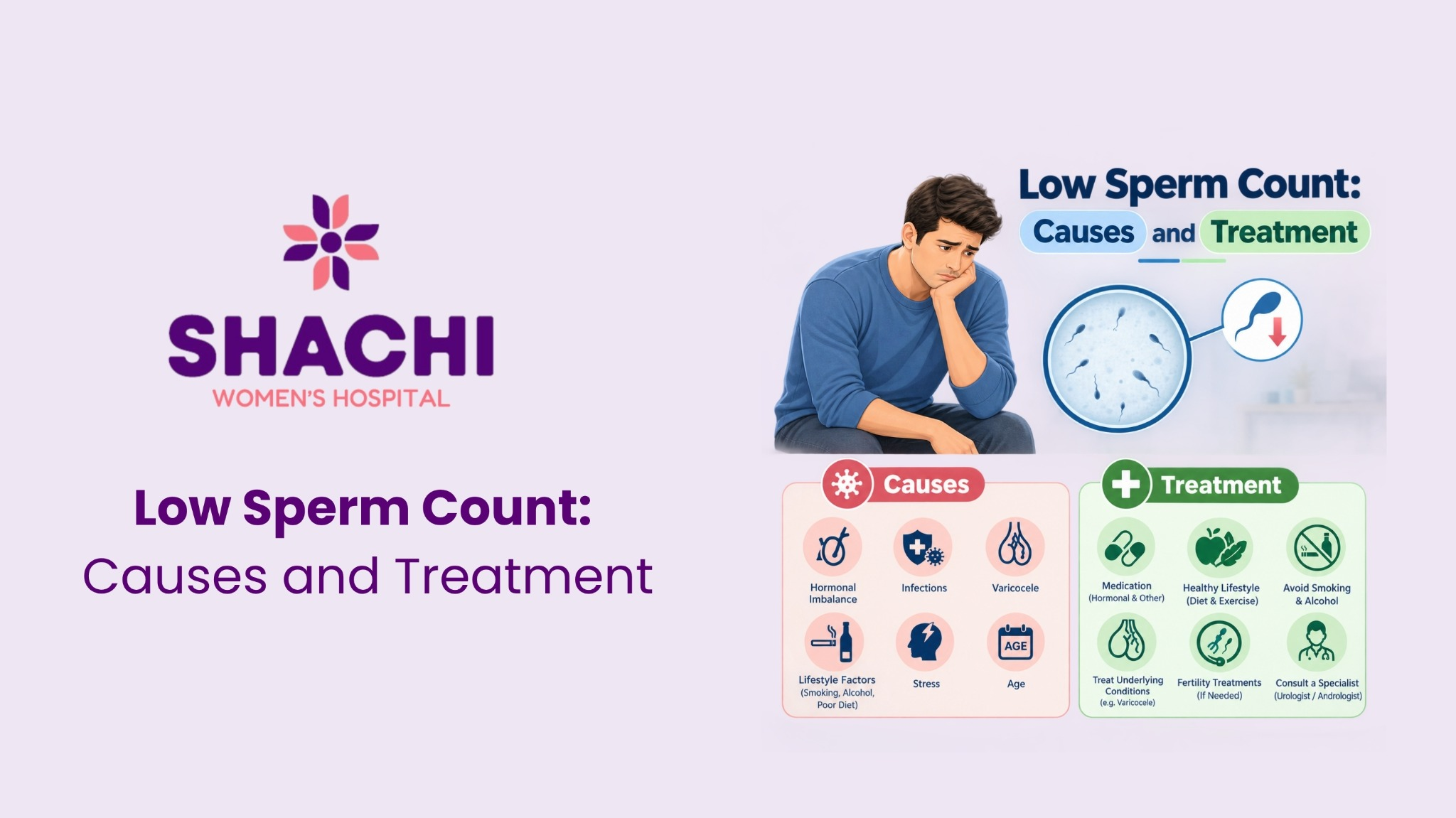
Low sperm count can make it harder for a couple to conceive, but it doesn't mean pregnancy is off the table. Once a proper diagnosis identifies what's going on, ICSI treatment in Ahmedabad can genuinely help, giving the couple a realistic shot at moving forward. What fertility concerns need is real medical support, not guesswork.
What Is a Low Sperm Count?
Doctors call it oligospermia, semen with fewer sperm than expected. Below 15 million sperm per millilitre is usually the cutoff for "low."
But count alone doesn't tell the whole story. How the sperm move, their shape, overall semen quality, and whether they can actually reach and fertilise an egg all matter too. Many with low counts go on to conceive naturally.
What Causes Low Sperm Count?
There's more than one possible cause here, and figuring out which one applies really is the first step, since treatment hinges on what's actually going wrong.
Medical conditions
Varicocele. Infections. Hormonal problems. Testicular disorders. Blockages somewhere in the reproductive tract. Any of these can interfere with sperm production or how well sperm move. Some genetic conditions cause very low sperm production on their own, and a past testicular injury or certain surgeries can leave lasting effects too.
Lifestyle and environmental factors
Smoking, heavy drinking, recreational drugs, anabolic steroids, carrying extra weight, and too much heat over time, all of these can chip away at sperm health. Certain chemicals, pesticides, and heavy metals also fall under this category.
That's not to say every case comes down to lifestyle. Sometimes doctors just can't find a clear reason, and that's normal too.
Medicines and previous treatments
Some medicines lower sperm production, including certain cancer treatments, testosterone use, and anabolic steroids. Don't just stop a prescribed medication on your own if you're worried about this. Instead, discuss it with your doctor.
How Is Low Sperm Count Diagnosed?
Semen analysis is the primary test; it assesses count, mobility, and form all at once.
One test rarely settles the question, though, since sperm counts shift naturally from one sample to the next. Doctors will often want a repeat test after some time has passed. From there, depending on what shows up, you might be looking at hormone tests, a testicular ultrasound, urine testing, or genetic testing.
Here's the thing worth remembering, don't draw conclusions from a single semen report. A fertility specialist needs to look at the numbers alongside your actual history and symptoms before anything makes sense.
Can Low Sperm Count Be Treated?
Yes, though what "treatment" looks like depends heavily on the cause and what the couple is actually hoping for.
Treating the underlying problem
A varicocele or blockage might call for surgery. Infections get treated medically. Hormone-related issues sometimes respond to medication, under a specialist's watch.
Improving everyday habits
Doctors often suggest:
- Quitting smoking
- Cutting back on alcohol
- Steering clear of anabolic steroids and recreational drugs
- Getting to a healthier weight
- Staying active
- Managing stress that's dragged on too long
- Keeping heat away from the testicles
- Checking with a doctor about any medicines that might be affecting sperm production
These habits genuinely help. But they're not a replacement for medical evaluation once pregnancy is taking noticeably longer than expected.
What If Natural Conception Is Difficult?
A low count doesn't automatically mean assisted fertility treatment is next. Depending on sperm quality and the couple's own situation, a doctor might bring in intrauterine insemination (IUI), IVF, or ICSI.
Sometimes sperm gets retrieved directly, from the reproductive tract or testicles, for use in treatment. What's right here really comes down to evaluating both partners together, not just one.
When Should You See a Fertility Specialist?
If you and your partner have been trying for about a year with no luck, it's worth getting checked. And if there's already a known testicular issue, past reproductive surgery, ejaculation difficulties, or anything similar in the picture, don't wait that long, get evaluated sooner.
At Shachi Women's Hospital, couples can get real guidance on fertility concerns and figure out what comes next based on their own situation. Skip the self-treatment and the supplement-only approach, talk to someone qualified first. For consultation, contact 90901 18080.
Clear medical guidance beats guesswork, every time. Find the actual problem. Then pick the treatment that fits it.