
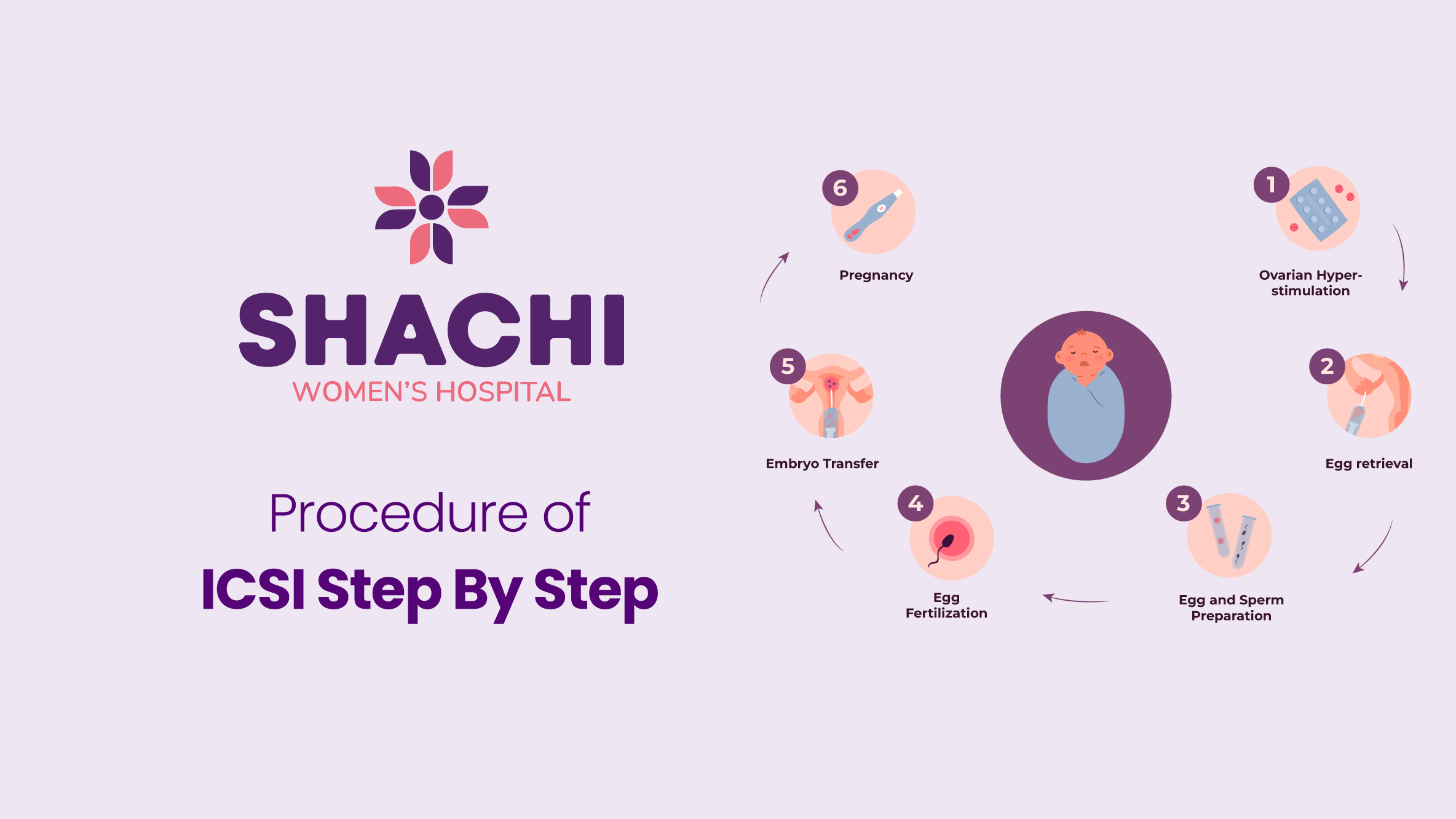
For those starting on their journey, knowledge of the treatment process can alleviate fears and increase confidence. If your doctor has suggested that you and your partner move for ICSI treatment in Ahmedabad, it would be normal for you to ponder on what is involved, what the stages are that you need to go through. That said, let’s take the process of ICSI one step at a time in an easy-to-understand manner that feels informative without being intimidating.
What is ICSI, and why is it recommended?
It is a more advanced form of fertility treatment and involves injecting a single healthy sperm into a mature egg, which is then implanted into the female partner’s uterus. This technique may be required if there are problems such as low sperm count, poor sperm mobility, abnormal shape of the sperm or a previously failed IVF. By enabling fertilisation to be achieved through a microscopic procedure, ICSI can overcome many of the barriers to natural fertilisation and allow more couples experiencing male infertility, as well as unexplained infertility, to become pregnant.
Step 1: Ovarian Stimulation
The process starts with ovarian stimulation, in which you take hormonal medications that encourage your ovaries to develop more than just one egg. This stage typically lasts about ten to twelve days. Throughout these days, serial ultrasound and blood tests are carried out to track follicle size and hormone levels. The eggs are harvested when they have matured but not too quickly.
Step 2: Egg Retrieval
When the eggs are ready, they will be collected. It is a quick and controlled surgery done with a light sedation to keep your pet comfortable. The doctor uses an ultrasound to guide the eggs out of the ovaries. It is a short procedure that lasts around 30 minutes. The majority of patients can return home the same day with little discomfort.
Step 3: Sperm Collection and Preparation
A sperm sample is collected from the male partner on the day of egg retrieval. Back in the lab, the sample goes through a procedure to separate viable, motile sperm from the remainder. The embryologists pick the highest-quality sperm for fertilisation, as selecting the proper sperm is a crucial feature of ICSI.
Step 4: Fertilisation Through ICSI
It is the most essential phase of therapy. With a series of intricate lab tools and high-powered microscopes, one sperm is injected directly into each mature egg. This form of ART is crucial to circumvent fertilisation barriers and results in high success rates in patients with male factor infertility.
Step 5: Embryo Development and Monitoring
After fertilisation, the surviving eggs (now embryos) are placed in a specialised incubator that produces an environment that's as close to life inside the uterus, and observed for a few days.
Step 6: Transfer of Embryo
Embryo transfer is uncomplicated and painless. The preferred embryo is then gently placed into the uterus via a small catheter. Anaesthesia is not required for this step, and is completed in a few minutes. Patients are then advised to lie down for a short period and should take all medications that have been prescribed by their clinic to assist the implant.
Step 7: The Waiting Period and Pregnancy Test
Final deployment is pending, generally considered the most psychologically painful part of the process. Hormonal support is maintained at this stage, and patients can resume their daily activities. A blood test is conducted around 12-14 days after the embryo transfer to check whether pregnancy has occurred.
Final Thoughts
Understanding how ICSI functions at each stage also enables couples to feel more informed and smooth in their own treatment. These two stages are designed to get the desired results and ensure comfort for the patient. In modern days of technology and knowledgeable fertility experts, Shachi Women’s Hospital for ICSI treatment in Ahmedabad has been a boon for countless childless couples who are taking the first step towards parenthood.